How Much Money Do You Need for a Live Poker Cash Game?
How much money do you need for a live poker cash game?
You need enough to meet the table’s minimum buy-in—and no more than you can comfortably lose.
Those are two separate limits. The card room sets the first. You set the second. Your personal limit should win every time.
As a current UK example, PokerStars LIVE at the Hippodrome lists its £1/£2 No-Limit Hold’em game with a £50 minimum and £400 maximum buy-in. That does not mean £50 is ideal or £400 is expected. It means any starting stack inside that range is allowed at that particular game.
There are three different numbers
Players often bundle three things together when they ask how much money they need:
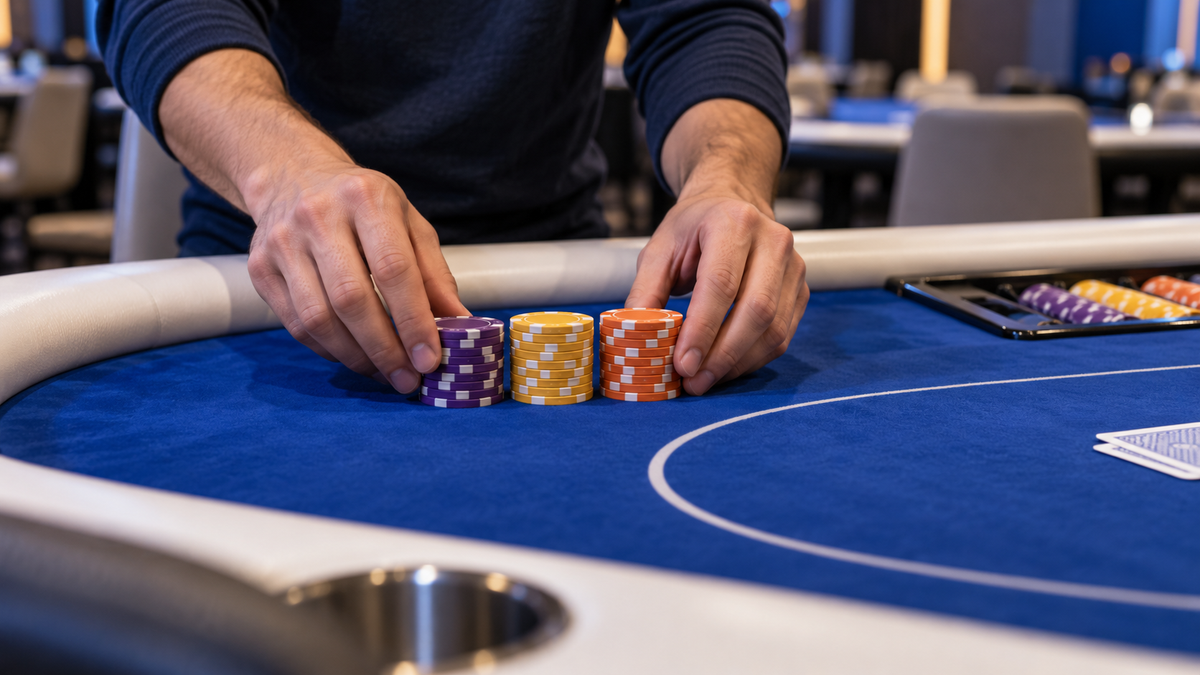
- The table buy-in: the minimum and maximum stack the room allows.
- The session budget: the most you are prepared to lose that day.
- The bankroll: money deliberately set aside for poker over many sessions.
For a first live game, the session budget matters most. You do not need to arrive with a professional bankroll calculation and a spreadsheet that looks like it requires an accountant. You need a clear limit that does not touch rent, bills, food, travel or borrowed money.
What does a £1/£2 buy-in actually mean?
The blinds tell you the cost of each orbit, not the amount you must sit down with. The room publishes a separate buy-in range.
In a £1/£2 game:
- £50 equals 25 big blinds.
- £100 equals 50 big blinds.
- £200 equals 100 big blinds.
- £400 equals 200 big blinds.
A shorter stack gives you fewer decisions after the flop and less room to recover from an early pot. A deeper stack creates more complex decisions and puts more money at risk. Buying in for the maximum is not a badge of seriousness. Buying in for the minimum is not automatically cautious if losing that amount would still hurt.
Check the room’s live listing before travelling. The Hippodrome’s current cash-game page, accessed 8 September 2026, lists £1/£2 at £50–£400, but stakes and limits vary by venue and can change.
Do you need to bring more than one buy-in?
No. A second buy-in is an option, not an entry requirement.
Experienced cash players sometimes plan for two or more buy-ins because losing one stack does not necessarily mean they played badly. Variance exists. So does the front door.
For a recreational session, deciding in advance that one lost buy-in ends the night is perfectly reasonable. If you choose to allow a second, include it in your session limit before the first hand. Do not invent it after losing because you suddenly feel the table owes you a refund.
You can leave a poker cash game at any time. You do not have to win your money back, complete an orbit or wait for a more dignified ending.
Keep the rest of the night separate
Your poker budget is not your entire evening budget.
Keep enough money outside the game for transport home, food and anything else you genuinely need. If you travelled with £200 but £35 is reserved for a taxi, your poker limit is not £200. It is £165 at most—and preferably less, because emergency money should not be sitting in a chip stack pretending to be available.
This also makes the end of the session cleaner. When your poker limit is reached, there is no negotiation with yourself and no raid on the journey home.
Do not confuse a session budget with a bankroll
A bankroll is designed to absorb the normal swings of repeated poker. The number of buy-ins somebody needs depends on the game, their win rate, how often they play, whether they can move down in stakes and whether that money can be replaced.
There is no honest universal figure for every player.
If poker is occasional entertainment, start with a session limit rather than borrowing the language of professional bankroll management. If you intend to play regularly, record every buy-in, cash-out, expense and session. Memory is especially talented at keeping the wins and misplacing the rest.
If losing the planned amount would change your mood, your week or your ability to pay for something important, the game is too big. Our piece on scared money in poker explains why financial pressure follows you straight into your decisions.
What happens to the money once you sit down?
Cash-game chips represent real value. They stay on the table while you play; quietly removing chips from your stack is known as going south and is not allowed. Our guide explains when chips can come off a poker table.
When you finish, take the full stack to the cashier under the room’s procedure. You are cashing out, not carrying tournament souvenirs home.
A sensible first-session checklist
- Check the exact stakes and buy-in range with the venue.
- Choose a starting stack inside that range.
- Set the maximum total you may buy in for before travelling.
- Keep food and journey-home money separate.
- Never use borrowed money or money needed elsewhere.
- Decide whether losing one buy-in ends the session.
- Take identification and anything else the venue requires; our live-poker packing guide covers the practical basics.
The minimum buy-in gets you a seat. Your own limit decides whether you should take it.