Can You Show Your Cards Before Calling in Poker?
The short answer
Do not show your cards before calling. Revealing them does not automatically count as a call, and the ruling can vary sharply by venue.
Under Poker TDA tournament rules, exposing cards with action pending may earn a penalty but does not automatically kill the hand. Under Grosvenor’s current UK house rules, deliberately showing a card while facing a bet to read an opponent is treated as a fold. House rules decide the result.

NO ONE CARES WHAT YOU FOLDED. The table does care what you exposed.
Showing your cards is not a call
A call means matching the outstanding bet. You normally make it by saying “call” or putting the required chips forward. Turning your cards face-up does not clearly do either.
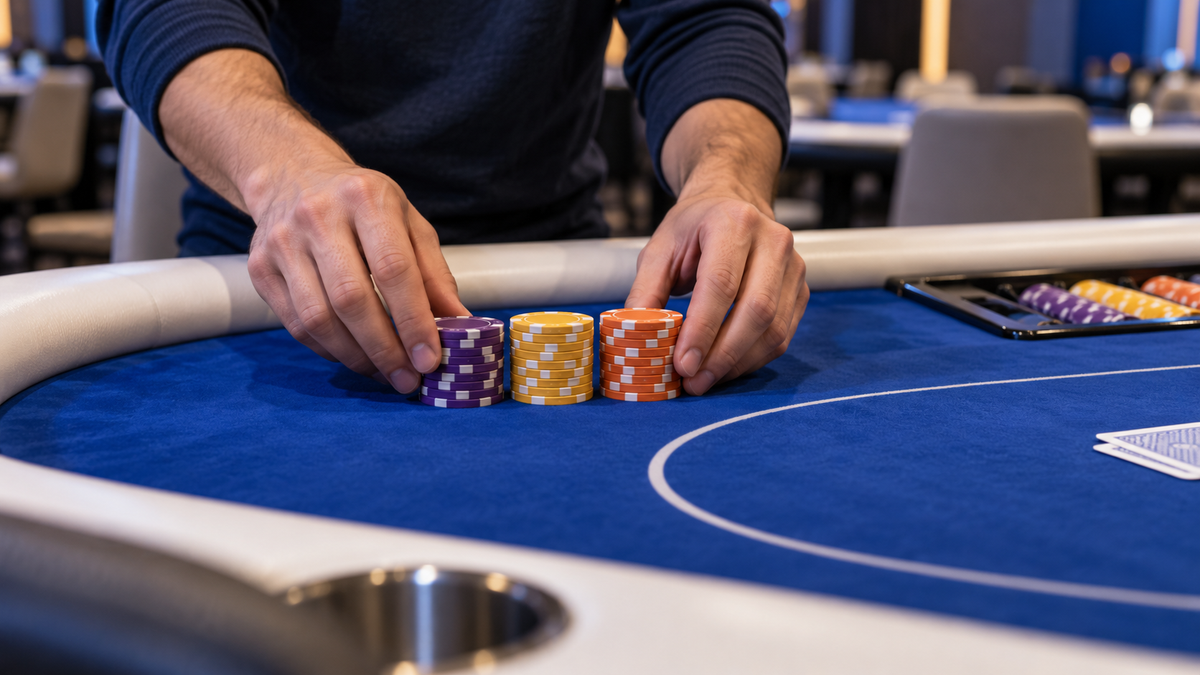
If you want to call and then show, make the call unmistakable first. Say it. Put the chips in. Wait for the dealer to confirm the action. Then table the hand when appropriate.
Trying to create a dramatic television moment before completing your action gives the dealer a ruling to make and everybody else information they were not entitled to have. The performance rarely improves from there.

FOLD AND SHUT UP. Occasionally, that is the ruling too.
What tournament rules say
Poker TDA Rule 68 says that exposing cards with action pending may result in a penalty, but not a dead hand. The rule applies even when the player exposing the cards is last to act. Any penalty begins after the hand.
That does not make exposure legal or clever. It means the tournament normally completes the hand before dealing with the breach.
The reason is bigger than the player who showed. In a tournament, exposed cards can affect decisions, stack movements and eliminations involving everyone still competing. What looks like private theatre between two players can alter the event for people at other tables.
What can happen in a UK poker room
House rules may be stricter. Grosvenor’s house rules, last updated in March 2026, distinguish between deliberate and accidental exposure.
If a player shows cards while facing a bet to gauge a reaction, the hand is deemed folded. If the player accidentally tables the cards, the hand is not automatically folded, but the player loses aggressive action for the rest of the hand. In practice, that means they cannot use the exposure and then raise.
Grosvenor also applies “show one, show all”: if you reveal a live card to another player, the information cannot remain private.
This is why quoting one rule you remember from another casino is not enough. The floor runs the room in front of you.
Does heads-up make a difference?
Sometimes, particularly in cash games. Some rooms tolerate a player exposing one or both cards when only two players remain in the hand. Others prohibit it or restrict the player’s remaining options.
Multi-way pots are more sensitive because the exposure can influence players who have not acted. Tournament rules can also protect the interests of everyone in the event, not just the players currently holding cards.
There is no useful universal shortcut here. If you do not know the house rule, keep the cards down and ask the dealer after the hand.
What if you expose a card accidentally?
Leave the hand on the table and stop moving. Do not throw the cards towards the muck because you assume the hand is dead. Do not begin explaining what you meant.
Let the dealer assess what was exposed, who saw it and whether action remains. If necessary, the floor will decide whether the hand stays live and what restrictions or penalties apply.
Protecting your cards is your responsibility. Keep them low, keep them over the table and use a small card protector if the venue allows one. Most accidental exposures begin with unnecessary lifting.
The clean way to handle it
- Keep both cards face-down while action remains.
- Declare “call”, “raise” or “fold” clearly.
- Do not expose a card to fish for a reaction.
- If a card turns over accidentally, stop and let the dealer rule.
- Check the room’s rules before assuming a television habit is allowed.
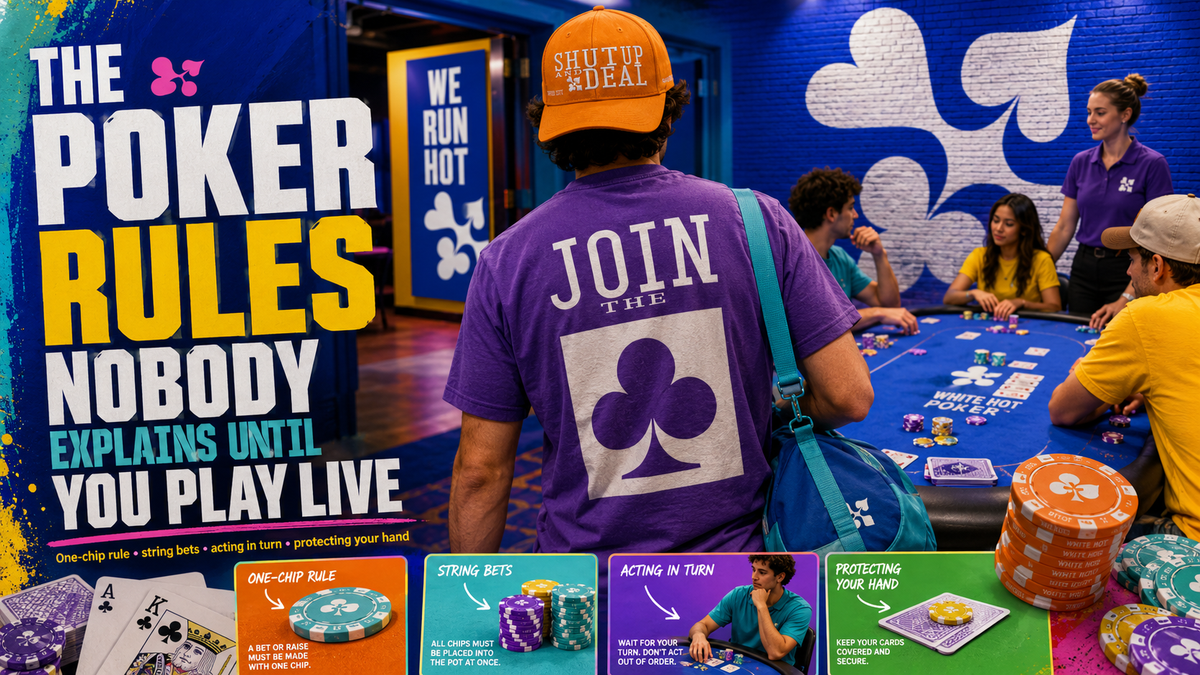
Gestures can carry formal meaning at a live table. Our guide to why poker players tap the table covers another small movement that can change a ruling. For the wider basics, read the poker rules nobody explains until you play live.
The verdict
Showing your cards before calling is not a stylish way to complete the action. Depending on the room, it may leave the hand live, restrict what you can do, earn a penalty or count as a fold.
Call first. Show later. If anything goes wrong, let the dealer decide before you donate the hand to the muck.