Why Do Poker Players Tap the Table?
The short answer
Poker players tap the table for two main reasons. During a live hand, tapping usually means “check”: the player stays in the hand without betting. After a hand, the same gesture is often a quiet “nice hand”, “fair enough” or simple acknowledgement.
Context changes everything. One tap can be a binding action while cards are live and a small sign of respect once the pot is over.

THE LADIES TABLE. Same game. Same language.
The same gesture has two different meanings
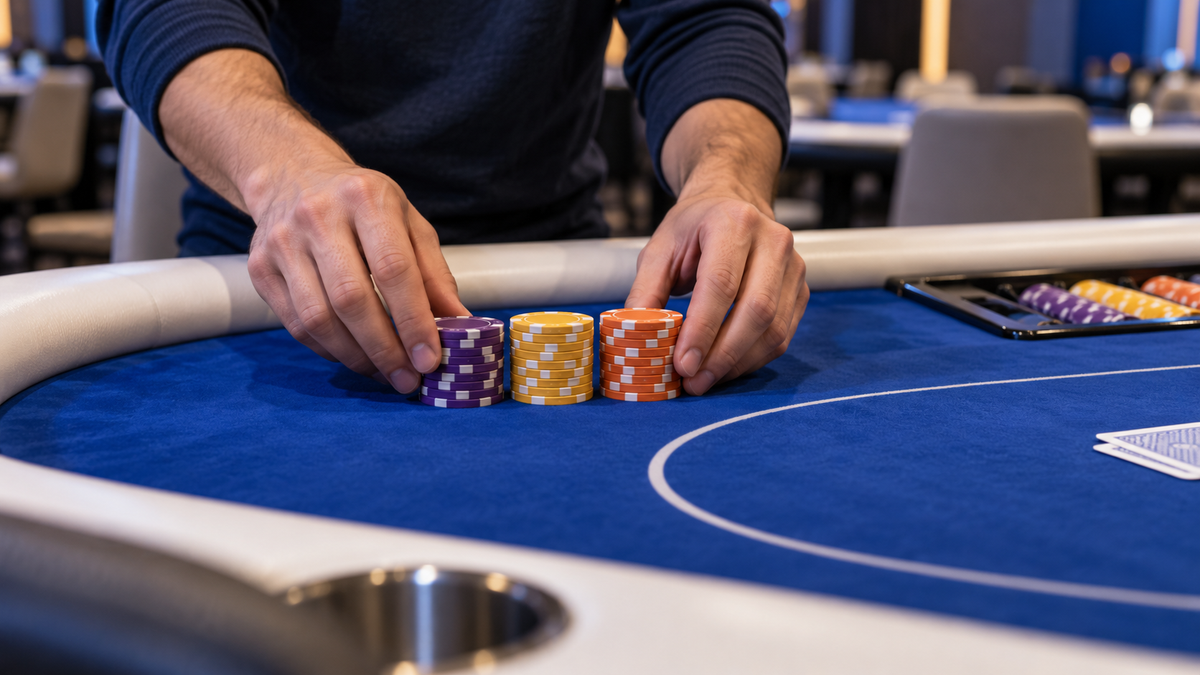
When the action is on you and nobody has bet, a tap on the felt is normally understood as a check. You pass the action to the next player but keep your hand live.
That is not body language. It is poker action.
If the pot has finished, the tap changes meaning. A player may knock the table after losing, folding to a good bet or seeing an opponent turn over the winner. It is the poker equivalent of a nod: brief, understood and not asking for a conversation.
The timing draws the line. Before the action is complete, the dealer is watching for a decision. Afterwards, the room is reading the gesture socially.
Why tap instead of saying “nice hand”?
Because “nice hand” can mean almost anything.
Sometimes it is genuine praise. Sometimes it means the winning cards were strong rather than the play. Sometimes it is automatic. Occasionally it arrives so heavily coated in sarcasm that everybody at the table can hear the quotation marks.
A tap is cleaner. It can acknowledge the result without analysing it, flattering the winner or inviting a post-hand lecture. It also works in a noisy room and between players who do not share much language.
For regular live players, it often becomes reflex. The pot is pushed, knuckles touch felt, next hand. No ceremony required.

JOIN THE CLUB. You learn the language by sitting in it.
When a table tap lands badly
The gesture is not automatically respectful. Tone survives without words.
If a player wins a large pot and taps towards the person they have just beaten, it can look like “thanks for the chips”. After a slow roll, a needle or an argument, the same movement may feel dismissive. Hammering the table is not a polite version of anything.
That does not make tapping complicated. It makes it human. A nod can be warm or smug; so can a knock on the felt.
The safest version comes after the hand, is small and asks for nothing. If you are trying to make sure everybody notices how gracious you are, the moment has already gone.
A tap during the hand can be binding
This is the useful part for anybody new to live poker: do not casually drum your fingers on the table when the action is on you.
A recognised checking motion may be treated as a check, even if you meant to adjust your cards, reach for a drink or accompany a story with enthusiastic hand percussion. Dealers need the action to be clear and the rest of the table needs it to stay in order.
You can only check when you are not facing a bet. If somebody has bet, your choices are normally to call, raise or fold. Tapping in that situation creates confusion rather than a new option.
House procedures differ, so a dealer may clarify an ambiguous movement. Do not depend on that. Say “check” clearly or make one deliberate tap only when the action is yours.
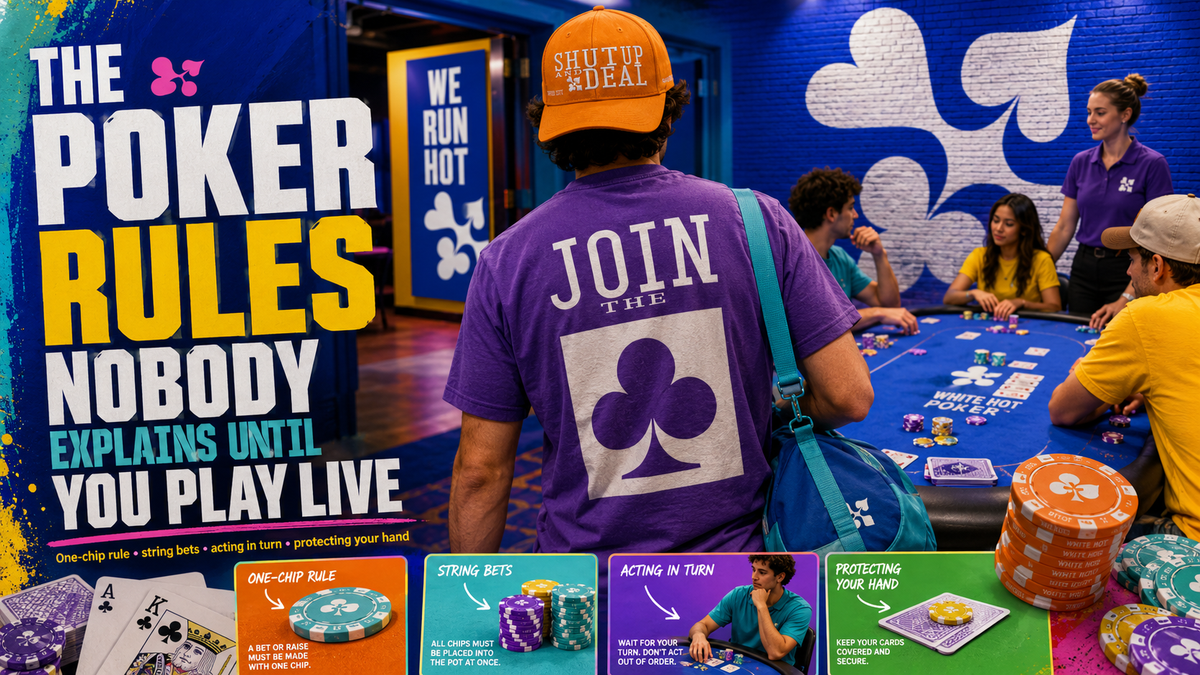
Clear declarations, action in turn and other live-table procedures are covered in the poker rules nobody explains until you play live.
Is tapping the table a poker tell?
Not by itself.
A forceful tap might show frustration. A quick one may be habit. A player who suddenly becomes formal after an hour of casual gestures may be uncomfortable—or may simply have realised the dealer is waiting.
Single movements are cheap evidence. Useful live reads come from changes in a player’s normal behaviour, combined with the action, timing and betting pattern. Treating every tap as secret emotional code is how observation turns into fiction.
The same applies to other attempts at hiding information. Sunglasses can cover the eyes, but they do not remove the rest of the player. Our guide to why poker players wear sunglasses looks at that problem properly.
Should you tap after every hand?
No. There is no requirement to acknowledge every pot, and constant tapping drains the gesture of meaning.
Use it when it comes naturally: after an opponent shows a good hand, makes a strong call or puts you in a difficult spot. Leave it alone when the hand ended badly, tempers are high or your gesture could be mistaken for needling.
You are also allowed to say “nice hand”. You are allowed to say nothing. Good table presence is not a performance measured by gestures per orbit.
Why the gesture belongs to poker culture
A live poker table brings strangers together under bright lights and gives them money, incomplete information and long stretches of silence. Small conventions keep that space workable.
The tap does two jobs because the table needs both: a clear way to pass the action and a quiet way to acknowledge another player. One is procedural. The other is social. Both help the game continue.
That mixture of formal rules and unwritten language is what separates live poker from clicking buttons alone. It is also why knowing the room matters as much as knowing the vocabulary. Poker Kult is our wider look at the characters, codes and shared references that grow around the game.
The verdict
During a hand, tapping the table normally means check. After the hand, it usually means acknowledgement or respect.
Watch the action before copying the gesture. In poker, timing does not merely change the message. It can change the ruling.